


Crate Training for Puppies – Complete Beginner’s Guide (2025)
Crate training is one of the most effective and humane ways to help your puppy adjust to your home, build good habits, and feel secure. But it only works if done correctly. In this beginner-friendly guide, you’ll learn how to crate train your puppy step-by-step, avoid common mistakes, and build a positive relationship between your dog and their crate.
What Is Crate Training?
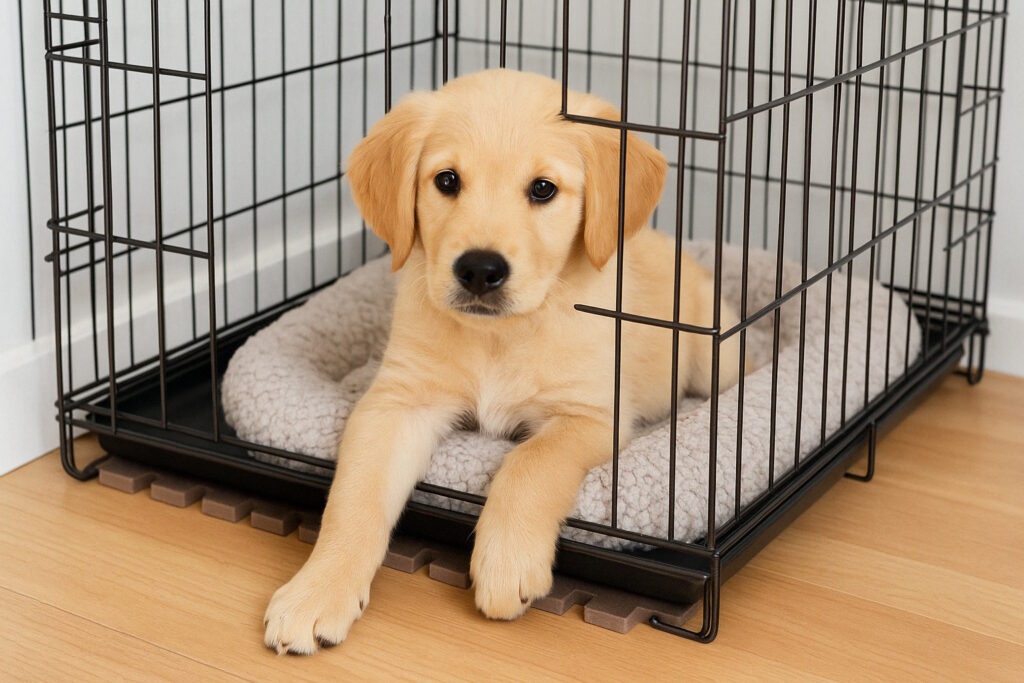
Crate training involves teaching your puppy to see their crate as a safe, comfortable space — like their own bedroom. It’s not about punishment or confinement. Instead, the crate becomes a calm place to sleep, relax, and learn boundaries.
Why Use Crate Training for Puppies
- Helps with potty training by building bladder control
- Reduces destructive behavior when unsupervised
- Gives puppies a sense of structure and safety
- Makes travel and vet visits less stressful
Crates also help puppies who suffer from separation anxiety. Having a small, safe space helps them self-soothe and prevents destructive behavior when you’re not home. It’s their calm zone in a busy household.
Step-by-Step Crate Training Plan
1. Choose the Right Crate
Pick a crate that’s big enough for your puppy to stand, turn around, and lie down — but not so big they can potty inside it. Wire crates with dividers are great for growing pups.
2. Introduce the Crate Gradually
Leave the crate open in a calm space. Add a soft bed, treats, and a chew toy inside. Let your puppy explore it freely without pressure. Feeding meals inside the crate also builds positive associations.
3. Start Short Sessions
Begin closing the door for a few minutes while you’re nearby. Slowly increase the duration. Praise and reward calm behavior, and always let them out while they’re quiet — not when they whine.
4. Create a Crate Routine
Use the crate for nap time, bedtime, and short absences. Consistency helps your puppy know when to expect crate time. Never use the crate as punishment.
5. Handle Nighttime and Whining
Place the crate near your bed at night. If they whine, check for potty needs — but avoid overreacting. Calm reassurance and patience work best. A warm blanket or heartbeat toy can soothe anxiety.
Many puppies wake up around 3–5 AM during the first few weeks. Keep potty breaks calm and silent. Avoid play or excitement. Use dim lighting and return them to the crate promptly to teach nighttime is for sleep.
Crate Training Tips
- Keep sessions short and positive in the beginning
- Ignore whining unless you suspect a potty need
- Never force your puppy into the crate
- Use verbal cues like “crate time” or “go to bed” consistently
Common Mistakes to Avoid
- Leaving the puppy in the crate too long (max 2–4 hours)
- Letting them out while whining (reinforces noise)
- Using the crate only when you leave the house
Watch This Crate Training Routine in Action
ChatGPT Prompt for Personalized Crate Routine
Want to build a customized crate training plan? Try this prompt at chat.openai.com:
Create a 7-day crate training plan for a 10-week-old golden retriever. Include nap times, bedtime routine, and potty breaks.
Final Thoughts
Crate training is a gentle, effective way to raise a confident and well-behaved puppy. It provides structure, safety, and space for your dog to decompress. When done right, your puppy will love their crate — and you’ll love the peace of mind it brings.
As your puppy grows, the crate becomes a retreat — a place they go to by choice when they want to rest or feel safe. This not only helps with stress but also builds confidence, especially during travel or loud events like fireworks.
With time, you’ll find your dog using the crate even when the door is open. That’s when you’ll know: you didn’t just train your pup — you gave them a personal space they can trust for life.
Related:
If this helped, share it with other new dog owners!


